
We recently did the most humbling thing a product team can do: we sat real people — strangers, not friends, not investors, not anyone contractually obligated to be nice — down in front of WeGoing! our group-travel app and asked them to plan a trip while no one watched.
No coaching. No leading questions. Just a human, a screen, and the quiet horror of watching someone not do the thing you were certain was obvious.
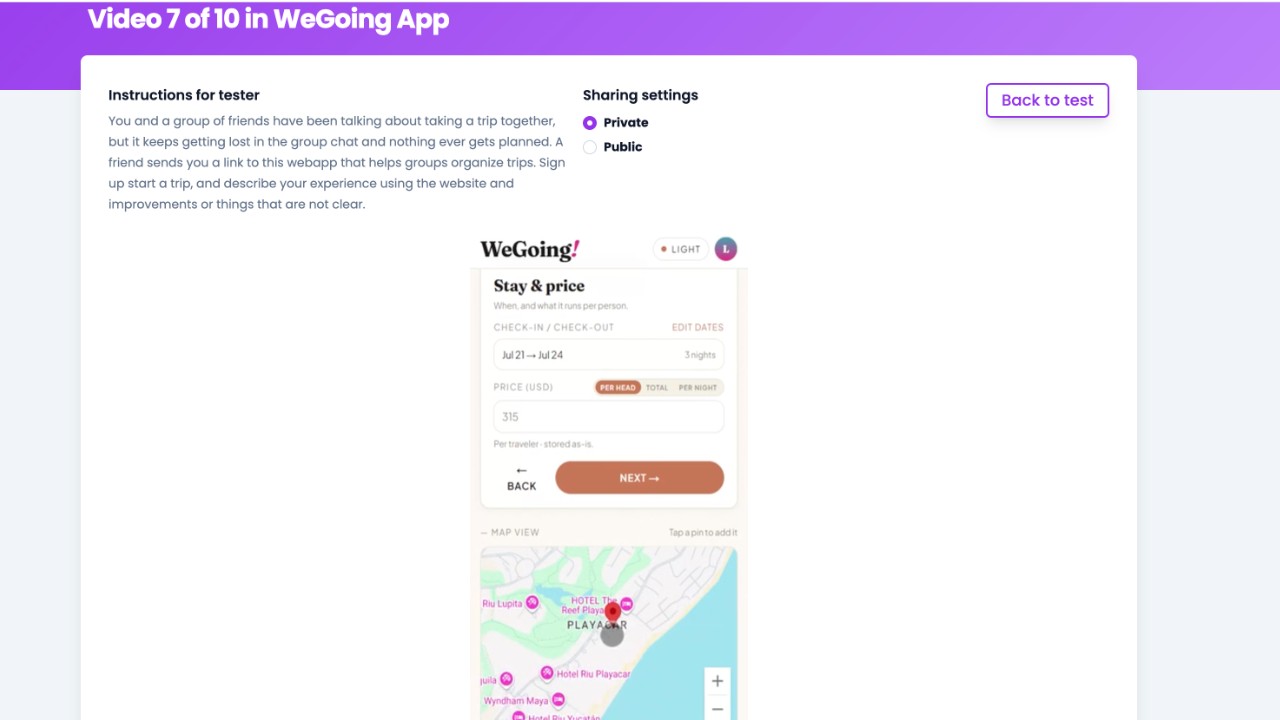
Here's the uncomfortable truth of today: everyone can build an app now.
You can generate a slick, competent group-travel app before lunch.
What you cannot generate is the single reason anyone would link it in their group chat to wrangle the chaos, and then share their actual trip and memories with the world.
Creating the trip for human experience and memories is stubbornly, gloriously human — and it's the only part that we want people to enjoy from start to finish.
So is WeGoing! delivering on that? Here's what real people showed us about our app, and what other group-travel apps got wrong, and what "building for human travel" actually means.
1. Most Apps Just Replicate the Work of a Spreadsheet
The entire promise of a group-travel app is that it rescues the organizer — the one friend who always ends up doing everything — from the spreadsheet, the date polls, and the Venmo chasing. And then most of them hand that same organizer a nicer spreadsheet and call it innovation.
Watch a real planner use one and you'll see the exact moment they catch it. As one person put it, mid-task: "If I'm the planner, just entering all the details of the trip — that doesn't save me time." They've been burned before. They can smell more-work-for-me from three screens away, and no amount of tasteful typography hides it.

Saving someone time isn't a claim you make in a headline; it's a feeling you have to actually deliver. The app has to do the genuinely annoying parts.
Review of WeGoing! as the solution: We surface the dates everyone's free, collect the money without seven awkward reminders after the trip, keep the plan from unraveling when one person gets cold feet.
If a human still has to herd all the cats themselves, you didn't build a tool. You built a clipboard with a login.
2. They forget there's real money — and real trust — on the line
A group trip is one of the only consumer products where you ask a person to put their money and their friendships on the table at the same time. That is an enormous thing to ask. A startling number of apps breeze right past it as if they were selling phone cases.
When we watched people reach the part where funds get pooled, and their concerns were alleviated. No more questions like: "How secure is this? That's one of my big red flags. What are you doing with the funds?"
Those aren't nitpicks. They're the precise questions a reasonable adult asks before routing their friends' money through a website they met four minutes ago.
Trust is not a mood you set with a color palette; it's a set of specifics.
Building for humans means treating the money and the friendships as the sacred things they are — and saying so out loud, on the page, before anyone has to ask twice.
3. Most apps are ai and feel like they were made by a machine that's never had friends

This is the one we feel most strongly about, and it's the one this era makes worse by the week. You can now assemble a beautiful, capable, completely soulless app in an afternoon. It'll have gradients. It'll have a testimonials section with no testimonials in it. And it'll be vague in that very specific way that means nobody who's actually survived a group trip was ever in the room.
See WeGoing Reviews on https://book.wegoingapp.com
Real people notice instantly. They can't always name it, but they feel it — copy that says a great deal and promises nothing, a flow clearly designed for a persona in a slide deck rather than for the friend who fronted the deposit and quietly became an unlicensed debt collector.
Let's be clear-eyed, because we're not here to romanticize a hard way of doing things: AI is a perfectly good way to build software. We used it. Without Claude, the idea of WeGoing! would still be in the group chat.
The point was never the tools; it's who's holding them and why. An app about getting your specific friends to a specific place is only ever as good as its understanding of that exact, messy situation — the flaker, the over-planner, the one who's broke this month and too proud to say so.
That understanding doesn't come out of a model. It comes from having been every one of those people. Trips are made for people, by people. The building can be automated. The empathy can't, and the empathy is the product.
So: build travel for humans
Put the three together and the whole thesis falls out: the hard part of a group-travel app was never the app. The engineering is a commodity now, and getting cheaper by the day. The only differentiator left is whether real humans feel understood, feel safe, and feel like the thing in front of them was made by someone who has personally been in a group chat at 1 a.m. trying to get eight people to commit to a Tuesday in June.

That's not a feature roadmap. It's a posture. It means showing people value before you demand their email. It means answering the money question before it's asked. It means writing like someone who has suffered a group trip, not like a brand that read about one. And it means treating the handful of strangers who try your product and tell you the unvarnished truth as the most valuable people in the building — because they are, and because they're doing for free what most companies are too scared to hear at any price.
The apps that win the next five years of group travel won't be the ones with the slickest auto-generated onboarding. They'll be the ones that never forgot there were real friendships riding on the outcome, and built like it. Make it for people, by people — or don't act surprised when people can tell.
That's the bar we're holding ourselves to. Ask us again in a year whether we cleared it. Better yet: try it, and tell us the truth. We're getting very good at listening.